May 27, 2025
0

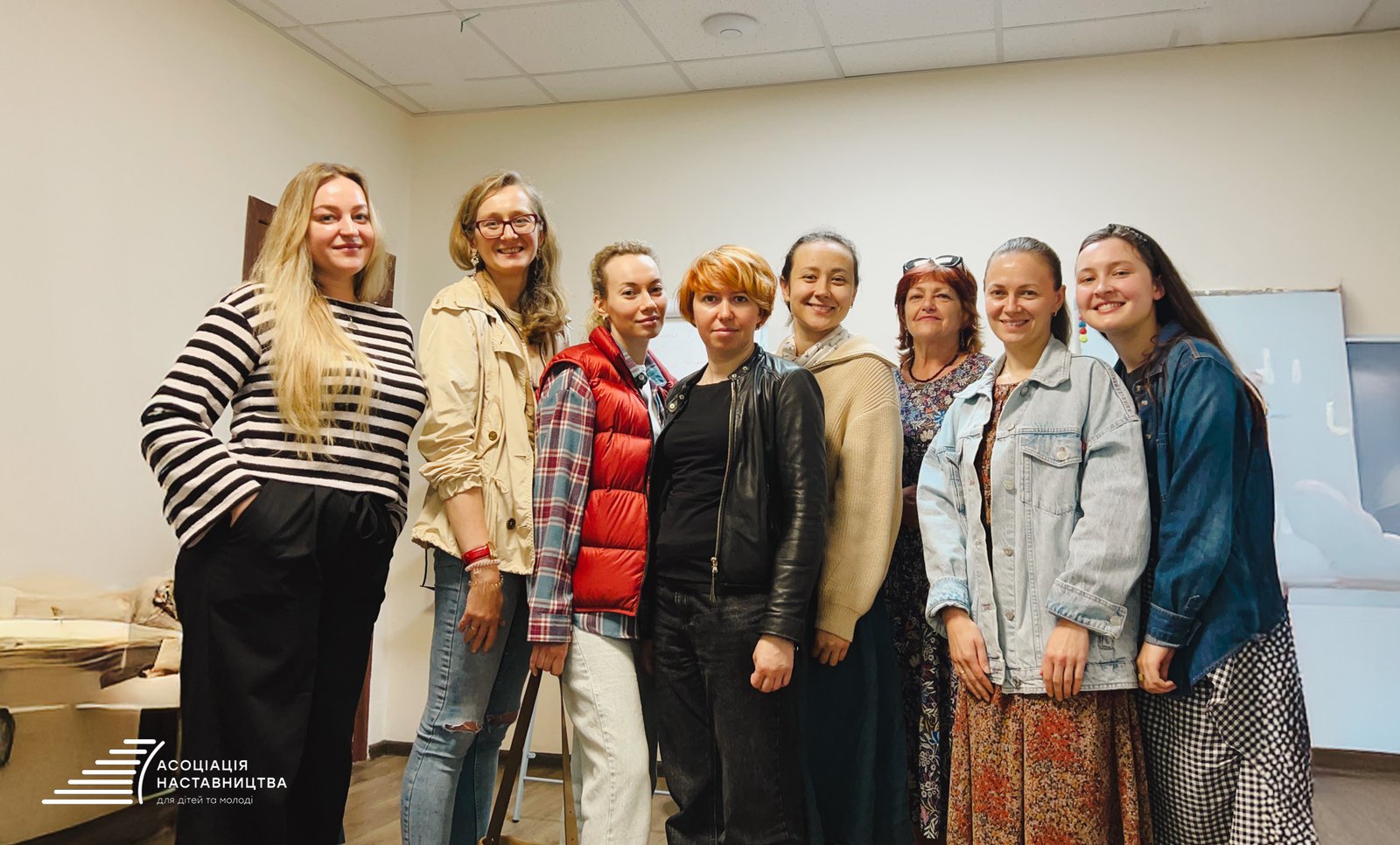
Each of us needs a place where you feel among your own people. The Mentoring Association creates exactly that kind of space for mentors, where there is support and no judgment.
This time we had the opportunity to discuss mentors’ requests, exchange experiences and receive support, generate creative ideas, and plan communication with children during the summer holidays, since children in institutions often go away for vacation, making it more difficult to maintain relationships at a distance.
When a mentor is able to see behind a child’s difficult or problematic behavior not just a challenge, but a deeper need and the reason behind that behavior, it opens the way to genuine support and understanding. That is why we pay great attention to discussing various aspects related to the lives of children living in institutional settings who have difficult life experiences marked by loss, trauma, and emotional instability.
We take a detailed look at how a child may use certain forms of behavior as defense mechanisms — often unconscious ways of self-preservation in environments where they did not feel safe or accepted. Aggression, withdrawal, manipulativeness, or excessive attachment — all of these can be signals of unmet emotional needs.
Our focus is on finding practical approaches for how a mentor can respond to such challenges with empathy and patience. We explore how trusting relationships within mentoring can create a safe space for a child, where they can gradually learn to build healthy connections, recognize their own emotions, and find constructive ways to express their needs.
All of our participants were captivated by the discussion of Bruce Perry’s book in the context of questions about dissociation as one of the defense mechanisms. We are sharing an excerpt from the book with you as well:
«A common response to stress is dissociation. This is a psychological defense mechanism in which a person distances themselves from their emotions and sensations, perceiving them as something that does not belong to them. In situations of danger and stress, our rational thinking shuts down, activating the ancient biological «fight or flight» response. But if a person is too weak, unable to fight, and has nowhere to run, they freeze and prepare to feel pain.
In anticipation of injury, the body begins producing endorphins — internal painkillers — and the nervous system tries to detach itself from what is happening. At such moments, a person begins to perceive the situation in a detached way, to the point where it may seem to them that it is not happening to them.
In moderate doses, dissociation is adaptive, for example, for a soldier on the battlefield. But if a person resorts to dissociative defense in any unclear situation, they seem to stop truly living. They do not engage in contact, do not process their emotions, and do not defend their boundaries. Often in such cases, a person is ready to give others everything they want just so they will leave them alone.»
If you are an active mentor or have completed the training and received approval, you can join by following the announcements on our page.


